
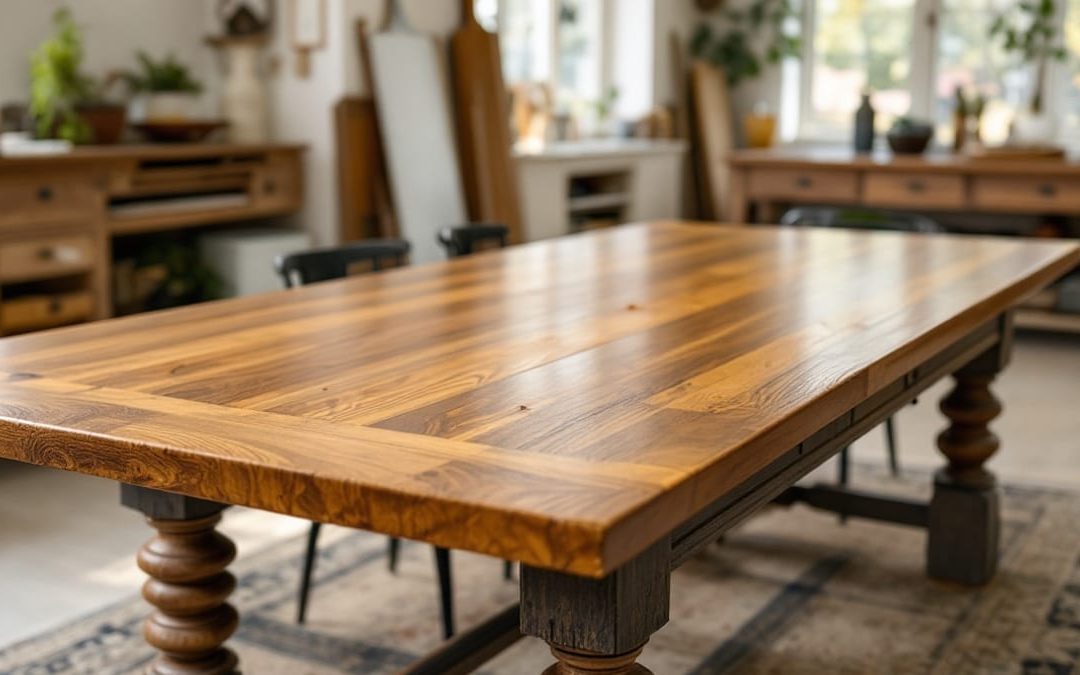
A vintage dining table carries more than just surface wear. It carries meals, arguments, holidays, and decades of daily life. When the finish starts to cloud, chip, or peel, refinishing is often the most sensible path forward, and it almost always costs far less than replacing the piece with something of equal quality. The good news is that most vintage tables, even those with deep scratches or water rings, are excellent candidates for a skilled refinishing job.
This guide walks through the full process so you know what to ask a professional, what affects the price, and how to tell a thorough job from a hasty one. When you are ready to move forward, our free matching service connects you with vetted local refinishing specialists who can assess your specific table and provide no-obligation quotes.
Why Vintage Tables Are Worth Refinishing
Older dining tables, particularly those made before the mid-1980s, were typically built from solid hardwoods like oak, walnut, mahogany, or cherry. These woods are dense, stable, and capable of being sanded and refinished multiple times over a lifetime. A table that looks ruined on the surface is often in excellent structural shape underneath.
Modern reproduction furniture, by contrast, frequently uses veneers over engineered wood or MDF cores. Once that veneer wears through or swells from moisture, the repair options narrow quickly. With a solid vintage piece, the wood itself is the asset, and refinishing simply removes the damaged finish layer and replaces it with a fresh one.
There is also a craftsmanship dimension worth considering. Mortise-and-tenon joinery, hand-cut dovetails, and thick solid tops are characteristics of older furniture that are rarely found at any price point in today's market. Refinishing keeps that craftsmanship in your home rather than in a landfill.
What the Refinishing Process Actually Involves
Vintage dining table refinishing is not a single step. A professional typically starts with a thorough assessment of the wood species, the existing finish type (lacquer, shellac, varnish, oil, or polyurethane), and the extent of any damage. Knowing the existing finish matters because different stripping methods work better on different coatings.
Stripping comes next. Chemical strippers, heat tools, or careful mechanical sanding are used to remove the old finish without cutting into the wood itself. This stage is where experience shows most clearly. Aggressive sanding on a thin top or around a carved edge can remove material that cannot be replaced. A careful technician works slowly here.
Once the bare wood is clean and smooth, the refinisher addresses any repairs: filling cracks or gouges, re-gluing loose joints, and correcting any unevenness across the surface. After that, staining (if a color change is wanted) and finish application follow. Most professionals apply multiple coats of the chosen finish, sanding lightly between each coat to create a smooth, durable surface. The final result should feel uniform to the touch and hold up to normal dining use.
Factors That Affect the Cost of Refinishing
Several variables drive the price of a vintage dining table refinishing project. Table size is the most obvious one. A small round pedestal table requires far less labor and material than a large extension table with multiple leaves. Each leaf is typically treated as an additional surface and priced accordingly.
The condition of the existing finish and wood matters a great deal too. A table with a single worn finish coat that lifts cleanly is a much faster job than one with five layers of different products applied over decades, or one with structural repairs needed before any finishing can start. Deep gouges, burns, or previous amateur repairs can add significant labor time.
Finish choice also plays a role. Hard-wearing conversion varnishes or catalyzed finishes cost more in materials but tend to last longer than standard wipe-on oil finishes. If you want a period-appropriate shellac or hand-rubbed oil finish for an antique piece, that may require more coats and curing time. Getting multiple local quotes is the most reliable way to understand what your specific table will cost.
How to Choose a Refinishing Professional
Not every furniture refinisher has experience with vintage or antique pieces. When reaching out to local professionals, ask specifically whether they have worked with the type of finish on your table and whether they handle any structural repairs in-house or subcontract them.
Ask to see photos of completed projects, particularly dining tables of similar age and style to yours. A refinisher who works primarily on modern furniture may not have the restraint needed for an older piece where aggressive sanding could damage irreplaceable character details.
It is also worth asking about the finish they plan to apply and why they recommend it for your table. A professional who can explain the tradeoffs between a polyurethane topcoat and a traditional oil finish in plain language is demonstrating real expertise. If the conversation feels rushed or vague, that is useful information.
Our free quote service helps you connect with local specialists who have been vetted for experience and customer feedback. You describe your table, we match you with appropriate professionals, and you compare their assessments without any obligation to book.
Caring for Your Table After Refinishing
Once refinishing is complete, a few simple habits will extend the life of the new finish significantly. Use felt pads under anything that sits regularly on the table, including centerpieces and serving dishes. Coasters and placemats protect the finish from heat and moisture, which are the two most common causes of early finish failure.
Wipe spills promptly with a soft cloth. Most modern finishes are reasonably water-resistant when cured, but standing liquid, especially near the edges, will eventually work its way in. Avoid silicone-based furniture polishes, which can build up and make future refinishing harder. A light application of paste wax every few months is a better choice for maintaining a satin or gloss finish.
With reasonable care, a professionally refinished solid wood dining table can go another generation before it needs significant attention again. That is the real case for investing in good work the first time.
Frequently Asked Questions
How long does vintage dining table refinishing take?
Most projects take between three and seven business days once a professional has the table in their shop, though complex repairs or specialty finishes can extend that timeline. Ask your refinisher for a specific estimate when they assess your piece.
Can a table with deep scratches or burns be refinished successfully?
In most cases, yes. Deep scratches can be sanded out or filled with a compatible wood filler before refinishing. Burns are trickier but often still manageable. A professional can tell you during an assessment whether the damage is fully repairable or whether some trace of it may remain.
Is it worth refinishing a vintage table versus buying something new?
For solid hardwood vintage tables, refinishing is almost always the better value. You preserve genuine old-growth wood and original craftsmanship at a fraction of the cost of a comparable new piece, assuming one could even be found.
Will refinishing reduce the value of an antique table?
For furniture with significant antique or collectible value, refinishing can sometimes affect resale price in the collector market. If you think your table might fall into that category, have it assessed by an antiques appraiser before committing to refinishing. For most vintage dining tables used as functional furniture, refinishing does not hurt and often improves practical value.
How do I get local quotes for my refinishing project?
Use our free matching service to describe your table and connect with vetted local refinishing professionals. You will receive no-obligation quotes and can compare approaches and pricing before making any decision.
Have a piece worth saving? Modern Revival Co. restores 20th-century and mid-century furniture in Edmonton — and we buy pieces too. Get in touch for a free assessment.